
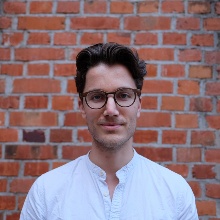
This image showsNils Egger

Nils Egger

M.A.

Research Associate and Ph.D. Candidate
Center for Interdisciplinary Risk and Innovation Studies
Chair for Sociology of Technology and Environmet

Contact

+49 711 685 83913
+49 711 685 82487

OrcID

Seidenstr. 36
70174 Stuttgart
Germany

Office Hours

Consultations by appointment

Subject

His research interests lie at the intersection of sociological digitalization studies, critical computational studies as well as socio-ecological transformation research and participatory-transformative methodologies.

Franken, Lina; Egger, Nils; Fischer, Luis; Lillich, Katharina; Schmid, Florian (2023). Nachnutzung von Forschungsdaten für qualitative Forschungen. Text Mining als Ansatz zur Exploration transkribierter Interviews. In: Methoden in digitalen Feldern. Fallbeispiele zu ethnografischen Methoden in digitalen Feldern und methodologische Reflexionen. Kulturanthropologische Notizen 84. https://dx.doi.org/10.21248/ka-notizen.85.16


Egger, Nils; Franken, Lina; Möbus, Dennis; Schmid, Florian (2023). Oral History auf dem Weg zu Big Data: menschliche und maschinelle Annotationen lebensgeschichtlicher Interviews im Vergleich. In: DHd2023 (Hg.): Open Humanities. Open Culture. Abstracts zur 9. Jahrestagung des Verbandes Digital Humanities im deutschsprachigen Raum e.V.. Luxemburg/Trier. https://doi.org/10.5281/zenodo.6304590


Beteiligung:
Franken, Lina; Möbus, Dennis (2024). Mensch und Maschine als Team. Exploratives Topic Modeling und manuelle Annotation in der qualitativen Sozialforschung [weitere Beteiligte: Florian Schmid, Nils Egger]. In: Zeitschrift für digitale Geisteswissenschaften 9. https://doi.org/10.17175/2024_003

B.A. Seminar on Sociological Theory | SS 2025, SS 2026

Nils Egger studied Sociology and Economics (B.A.) at the University of Zurich and Sociology (M.A.) and Environmental Studies (Certificate) at the Ludwig-Maximilians-University Munich. Since May 2023, he is a research associate in the Stuttgart Research Initiative "Discursive Transformation of Energy Systems". There he is working on the development of a methodology for digitally supported and stakeholder-integrated decision-making processes for a holistically optimized energy transformation of (pre-)urban neighborhoods. His doctoral thesis at the Chair of Technology and Environmental Sociology is entitled “Digital planning support systems as part of transformative governance? The co-production of transformation knowledge in municipal heat planning.”

To the top of the page